
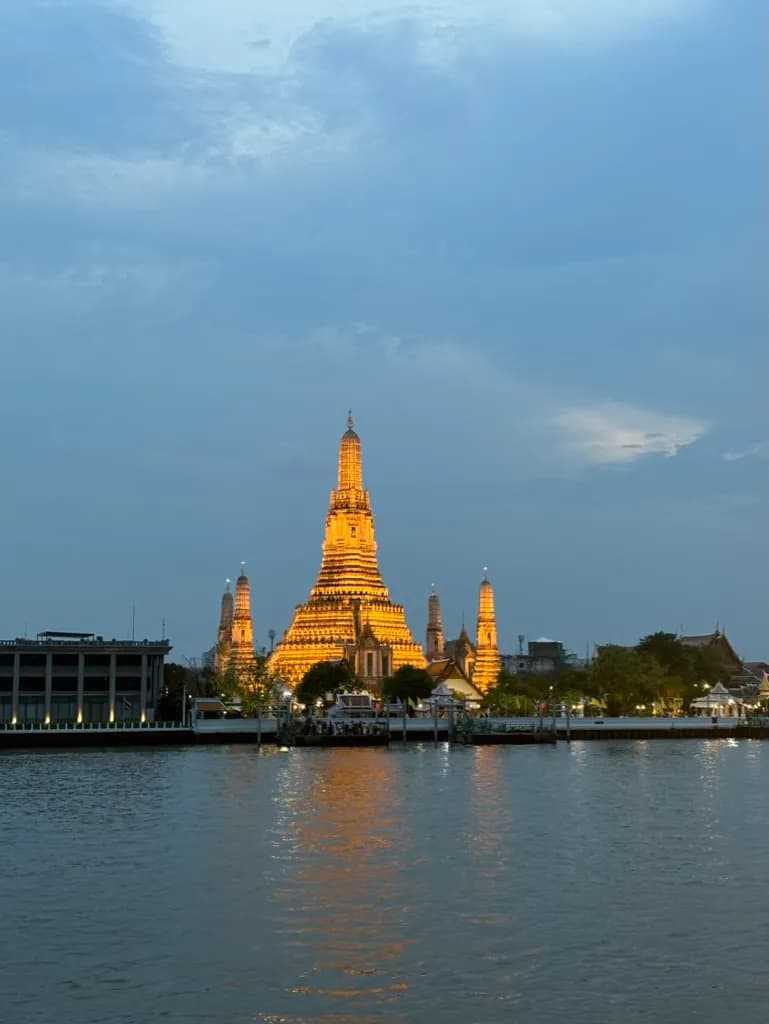
Thai cuisine is arguably the most complex and rewarding food culture in Southeast Asia. It is a system built on balance, where sweet plays against sour, salt against heat, richness against freshness, and it operates at every level, from a forty-baht bowl of boat noodles to a twelve-course tasting menu in a Michelin-starred dining room.
For the curious traveller, Thailand's food landscape offers something that extends beyond taste. It offers entry into the culture itself, into the rhythms of markets, the generosity of home cooking, the precision of street vendors who have perfected a single dish across generations. If you're planning your first trip, our Thailand travel guide covers the essentials before you arrive.
Thailand's Food Philosophy
Understanding Thai food begins with the concept of balance. A Thai meal is not a sequence of individual dishes but a composition: a spread of flavours, textures, and temperatures designed to be eaten together. Rice anchors the table. Everything else plays around it: a sharp som tam, a rich massaman, a cooling herb salad, a bowl of clear broth.
This philosophy of balance extends to how Thais eat throughout the day. Morning might bring a bowl of jok (rice porridge), mid-morning a plate of khao man gai from a street stall, lunch a curry over rice, and evening a shared table of four or five dishes with family. Eating is constant, communal, and utterly central to social life.
Bangkok Street Food Trails
Chinatown (Yaowarat)
Bangkok's Chinatown transforms at dusk. The neon signs ignite, the woks begin to flame, and Yaowarat Road becomes one of the world's great open-air dining experiences. A guided Bangkok street food tour by night is one of the best ways to navigate this sensory labyrinth. Essential stops include charcoal-grilled seafood on Soi Texas, rolled noodles at Jay Fai (if you can secure a table), and mango sticky rice from the corner vendors who have been there for decades.
Old Town (Rattanakosin & Banglamphu)
The streets around the Grand Palace and Khao San Road hold some of Bangkok's oldest food vendors. A Damnoen Saduak floating market tour from Bangkok is another essential culinary experience, with trading boats piled with tropical fruit and freshly cooked noodles. Boat noodle alleys, family-run curry shops that open only for lunch, and morning markets where monks receive alms alongside office workers buying breakfast. This is food embedded in daily ritual.
Ari & Sukhumvit
For a more contemporary food experience, the Ari neighbourhood offers a blend of traditional street food and modern Thai restaurants. Along Sukhumvit, the diversity reflects Bangkok's cosmopolitan nature: Thai-Japanese fusion, craft cocktail bars with Thai-inspired bites, and late-night isaan restaurants where the som tam comes with a side of live music.
Cooking Classes
Thailand's cooking class culture is one of its great gifts to travellers. The best classes begin not in the kitchen but in the market, walking through wet markets with your instructor, learning to select lemongrass by scent, galangal by firmness, and chillies by colour.
In Bangkok, classes range from home-kitchen intimacy to professional-grade instruction. In Chiang Mai, the tradition runs even deeper. Thai cooking classes often take place at organic farms in the surrounding hills, where ingredients are harvested minutes before cooking. Koh Samui and Phuket offer beachside variations where the classroom opens to ocean views.
What stays with you is not just the recipes but the understanding. Once you have pounded a curry paste from scratch, felt the resistance of the mortar, smelled each ingredient as it releases its oils, you carry that knowledge home with you.
Chef's Table Experiences
Thailand's fine dining scene has evolved dramatically. Bangkok now holds more Michelin stars than many European capitals, and the country's best chefs are creating experiences that honour Thai food traditions while exploring new possibilities.
Private chef's table experiences, whether in a converted warehouse in Charoen Krung, a teak house in Chiang Mai, or a villa kitchen overlooking the Andaman, offer intimate evenings where the chef narrates each course. These are not merely meals but conversations about ingredient, technique, and place.
Regional Flavours
Northern Thailand
Chiang Mai and the surrounding provinces bring a different palette: milder, herbaceous, influenced by Burmese and Shan cooking traditions. Khao soi (curry noodle soup), sai ua (northern sausage), and nam prik noom (green chilli dip) are essential experiences. A 7-day Thailand itinerary can easily include a northern culinary detour.
Isaan (Northeast)
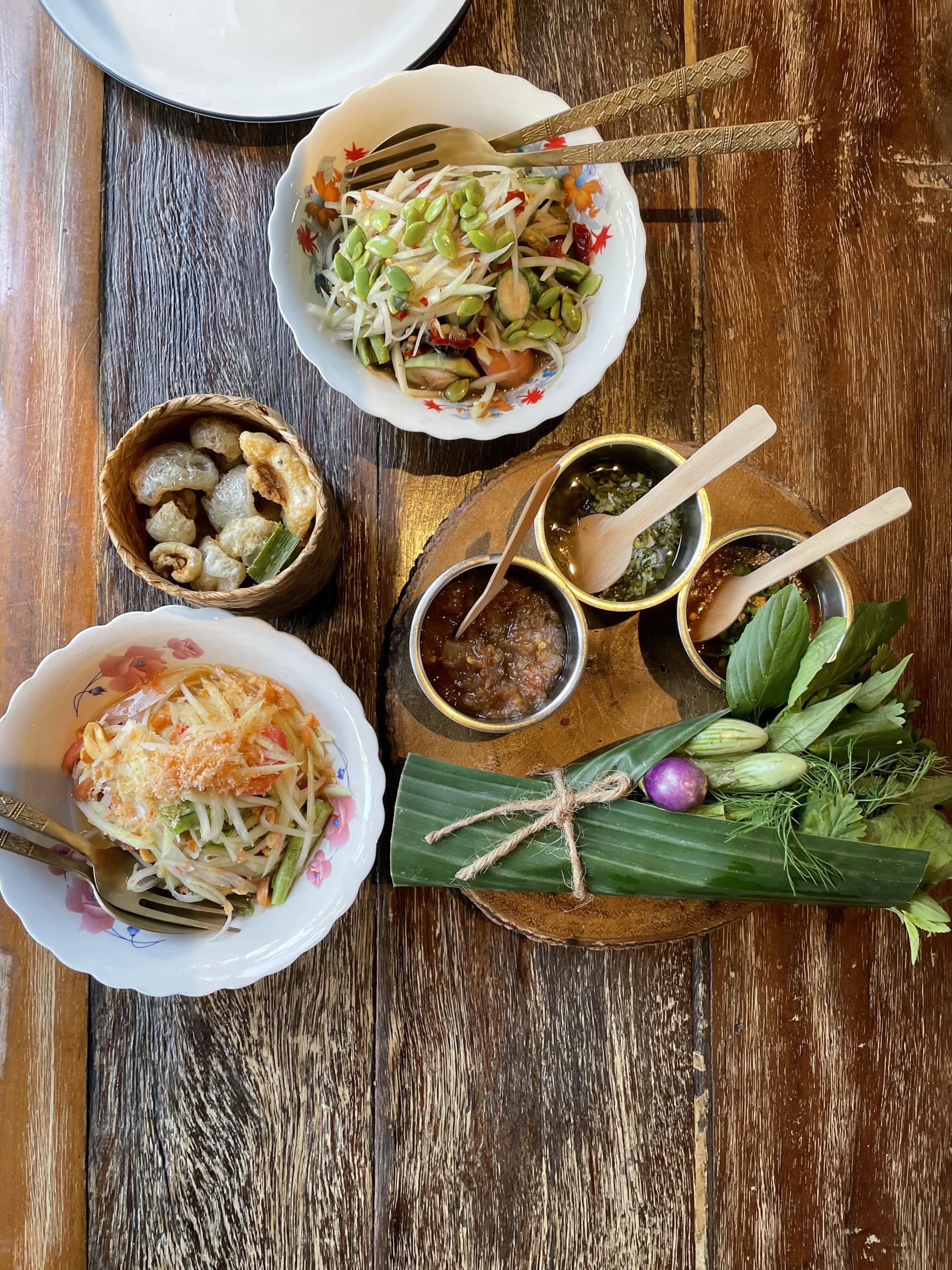
Thailand's largest and most underexplored culinary region. Isaan food is bold, fermented, and deeply satisfying: larb, som tam with salted crab, grilled chicken with sticky rice. The flavours are intense and uncompromising, and the experience of eating at a roadside Isaan restaurant is one of Thailand's great pleasures.
Southern Thailand
The south brings coconut, turmeric, and serious heat. Massaman curry originates here, as does the fiery gaeng tai pla (fish kidney curry). Coastal southern food tends toward seafood abundance: whole grilled fish, stir-fried crab, and curries enriched with coconut cream. Combine a southern food journey with an island hopping tour for the full coastal experience.
How Jenesis Curates Food Journeys
Every food journey we design begins with a question: what does flavour mean to you? Some travellers want the deep dive: markets at dawn, street food trails, regional exploration. Others prefer curated encounters, a private chef's table, a single unforgettable cooking class, a guided tasting that opens new understanding.
Our Chapter Three, Flavours of Creation, builds food into the fabric of the journey rather than treating it as a side attraction. Because in Thailand, food is never separate from culture. It is culture.
Every chapter is a new beginning.
James Bradley
Travel Consultant at Jenesis Travel
Based in Bangkok, James designs bespoke Thailand journeys tailored to every traveller. With first-hand knowledge of every property and experience in our network, he brings personal insight to every itinerary.
@jenesistravelShare this
You May Also Enjoy
Best Neighbourhoods in Bangkok for Expats: An Honest 2026 Area Guide
March 17, 2026 • 6 min read
Cost of Living in Bangkok: A Realistic Monthly Breakdown for 2026
March 17, 2026 • 5 min read
Moving to Thailand from the UK: The Complete 2026 Guide
March 17, 2026 • 10 min read
Ready to begin your Thailand journey?
Start Planning