How Many Days in Thailand? A Practical Trip-Length Guide
Days in Thailand can shape your entire journey. We explain the ideal trip length for Bangkok, Chiang Mai, beaches, honeymoons, and family travel.
- Written by
- Ann Sitaporn
- Published
- August 3, 2026
For most first-time visitors, 10 to 14 days in Thailand is the ideal range. Seven to nine days can work well for Bangkok plus one other region, while 15 days or more allows a slower route with multiple beach areas. It also creates extra space for a family vacation or honeymoon.
The calendar can be misleading. A long-haul arrival often requires recovery time, while domestic flights and ferries can consume much of a day. Each hotel change also reduces the time available to enjoy your destination. We generally recommend choosing a route around your trip’s purpose, rather than trying to fit every famous place into one journey.
A week might suit a focused 7-day Thailand itinerary, while two weeks usually allows a balanced combination of Bangkok, the north, and one beach destination. For longer stays, we can add a second coastal area, a national park, or more unstructured time. The ideal trip length depends on how you want Thailand to feel, so we'll start with what each duration can realistically include.
Key Takeaways
- For most first-time visitors, a 10 to 14-day Thailand itinerary balances Bangkok, northern regions, and one beach base.
- Seven to nine days works best with Bangkok and one additional region, such as Chiang Mai or the beaches.
- A comfortable travel pace matters more than checking every destination off your list.
- Fourteen days allows a more relaxed route through northern Thailand, the south, and an optional historical stop.
- We recommend choosing your trip length around its purpose: rest, romance, family time, celebration, or discovery.
How Many Days in Thailand Should You Plan for a First Trip?
For most first-time visitors, seven to nine days is enough for a focused introduction. A first time visitor should avoid excessive hotel changes and protect their travel pace. Planning 10 days in Thailand is enough for Bangkok, Chiang Mai, and one carefully chosen southern base.
What can you realistically see in seven to nine days?
A shorter trip works best when you choose one main experience and limit hotel changes. A 7 days in Thailand itinerary could include:
- Bangkok and Chiang Mai: three nights in Bangkok, followed by three or four nights in Chiang Mai. This suits travellers interested in temples, food, markets, crafts, and northern Thailand culture. Experiences might include the Grand Palace, a floating market, or an ethical elephant sanctuary with no riding.
- Bangkok and Phuket or Krabi: three or four nights in Bangkok, followed by four or five nights on one coast. This is the better choice if relaxation, private boat trips, and time by the sea matter most.
- The capital, Chiang Mai, and one beach base: possible in nine days, but only with careful planning and a single southern destination.
Bangkok, the north, and the islands shouldn't all be combined in one week. Domestic flights may be short, but each move also includes packing, check-out, road transfers, airport time, and settling into a new hotel. We use private transfers where practical because they protect valuable time and keep the journey comfortable.

Why are 10 to 14 days usually the best fit?
This is usually the most practical range for a first trip. A typical route includes three or four nights in the capital, three or four nights in Chiang Mai, and four to six nights on one coast.
That length also allows recovery from jet lag after a long-haul flight, a slower day between major experiences, and flexibility for weather or personal interests. A first-trip Thailand itinerary should follow your purpose, whether that is rest, romance, family time, or discovery, rather than a fixed package.
Which Thailand Itinerary Fits Your Available Time?
The right answer depends on what you want the journey to provide. A well-planned Thailand itinerary uses fewer bases, giving each place enough time to feel distinct rather than collecting destinations through constant transfers.

7 to 9 days
Recommended route: Bangkok plus Chiang Mai or one beach base
Ideal travel style: Focused first trip
What to avoid: Combining all three regions
10 to 14 days
Recommended route: Bangkok, Chiang Mai, and one coast
Ideal travel style: Balanced discovery and rest
What to avoid: Changing hotels every night
15 or more days
Recommended route: Two regions, multiple islands, or a slower family route
Ideal travel style: Relaxed, celebratory, or romantic travel
What to avoid: Filling every day with activities
The table reflects a practical Thailand itinerary, with travel pace taking priority over the number of destinations.
How long do Bangkok and Chiang Mai need?
For a first visit, we recommend about three nights in Bangkok. The city brings urban culture, exceptional food, riverside temples, design, neighborhood markets, and a useful introduction to Thailand's pace and contrasts.
Chiang Mai deserves three to four nights, plus travel time. Its contribution is different, with historic temples, crafts, local markets, northern cuisine, nearby nature, and slower experiences outside the city. Adding northern Thailand feels more comfortable when the total trip lasts at least seven to nine days, especially when domestic flights are involved.
How many beach days should you add?
Plan four to six nights for a meaningful beach stay. Two nights often feel too short once you account for the travel time, check-in, and settling into a resort. This matters even more when you're paying for a high-end villa, spa treatments, private boat trips, and time without a schedule.
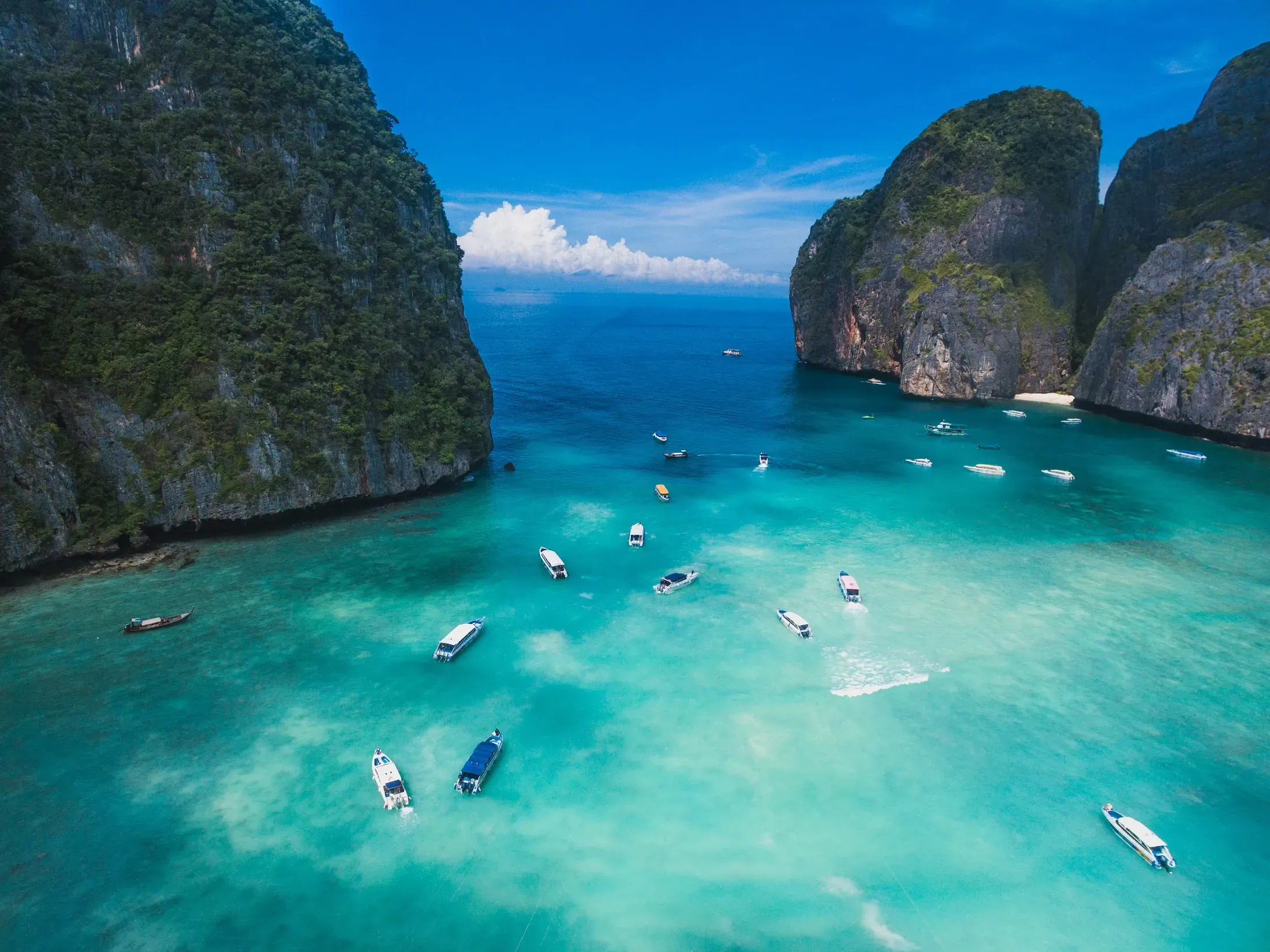
We usually recommend one southern Thailand base, such as Phuket, Krabi, Koh Samui, or another suitable island. Phuket and Krabi can both support memorable excursions, including a boat day to the Phi Phi Islands, without requiring another hotel move. Koh Samui can offer a comfortable alternative, while Koh Phangan can suit travellers seeking a slower island stay.
Island hopping can turn restorative days into ferry connections and packing. Koh Phangan is a useful choice for a relaxed Gulf route, while Koh Tao may appeal to travellers focused on snorkeling or diving. A party-focused route is different, and Koh Phangan should be selected for its atmosphere and setting rather than added automatically.
Ferry schedules also affect the time needed. Reaching Koh Phangan from Koh Samui can be straightforward, but the transfer still takes part of a day. Choosing Koh Phangan as one base usually creates more ease than combining it with several southern islands.
When Do Two Weeks in Thailand Make Sense?
Two weeks in Thailand is a strong choice for Bangkok, Chiang Mai, and one coastal area. You can also add Ayutthaya as an optional historical stop, provided the route leaves room for rest. A slower Gulf plan could include Koh Phangan instead of another beach area.
Fifteen nights or more suits multiple islands, a family-friendly pace, or a honeymoon with fewer transfers. Koh Phangan works well when the goal is a calm island stay rather than a packed schedule. A Koh Phangan base can support boat trips and unplanned mornings without making every day feel programmed. For travellers who choose Koh Phangan, keeping nearby transfers limited preserves the value of the extra nights.
Longer doesn't mean adding activities every day. We use the extra time for late mornings, flexible plans, weather changes, and the space to enjoy a beautiful hotel properly. A Koh Phangan stay can feel especially rewarding when the itinerary protects that breathing room. If Koh Phangan is paired with Koh Samui, check ferry times before booking nonrefundable connections.
How Should the Season Change the Number of Days in Thailand?
Season affects the best coast and the amount of time you can comfortably spend outdoors. It also means the best time to visit depends on your route and priorities, not one universal month. Choose your coast first, then decide how many days suit the experiences you want.
Which Coast Works Best During Your Travel Month?
Southern Thailand has two main coastal regions. Phuket and Krabi, on the Andaman coast, are generally wetter from April to October. Koh Samui and Koh Phangan, on the Gulf coast, usually have their wetter period later, often between September and December. These are broad patterns, not guarantees, so check the Thai Meteorological Department's current regional forecasts before confirming your route.

If you have limited time, choose one coast rather than trying to cover both. Comparing Koh Phangan with the Andaman coast can help you match sea conditions to your dates. A week split between beaches and island hopping can leave more time in airports, cars, and ferries than on the sand. Our Thailand beach itinerary planning follows the conditions, your travel style, and the purpose of the trip.
Ferry connections to Koh Phangan can become less practical during rough weather. Check the Thai Meteorological Department's regional and shipping forecasts before finalizing your route. Local hotel teams and experienced guides can also advise whether a particular island or boat journey is suitable during your dates.
Should Hot or Rainy Weather Mean Adding More Days?
Hot weather can make a full sightseeing schedule tiring, especially when temples, markets, and outdoor experiences are combined. Koh Phangan may work well for a slower island stay, with extra resort time, pool breaks, and spa treatments built into your travel pace.
During rainy periods, keep boat trips, diving, and other outdoor activities flexible. A weather buffer around Koh Phangan can protect your plans when storms affect sea conditions or departures. Showers may be brief, but adding one or two nights can create useful breathing room. Check current conditions for Koh Phangan before committing to a boat-heavy route, and don't add days simply to promise uninterrupted sunshine. Choose a flexible Thailand itinerary that lets you enjoy Thailand at its actual pace.
How Should Families and Honeymooners Adjust Their Thailand Stay?
The ideal length changes when the purpose is family time or a honeymoon. Both trips benefit from fewer hotel changes, flexible days, and a Thailand itinerary shaped around comfort rather than a long list of attractions.
What Is a Comfortable Family Itinerary Length?
For most families, 10 to 14 days is the most comfortable range. We usually suggest three or four nights in Bangkok, followed by five to seven nights at one beach resort, such as Koh Samui. This keeps the route simple and leaves the final part of the trip easier and more restorative.
Families need more unplanned time than couples travelling alone. Naps, slower meals, changing weather, tired children, and extra time getting everyone ready can quickly change a daily schedule. Families who prefer a quieter beach setting might consider Koh Phangan, while Koh Samui generally offers a wider choice of resort services and activities.
A single beach base also avoids turning a family holiday into repeated packing and unpacking. Koh Phangan can work well for families seeking a slower stay, but its ferry connection adds another transfer that may not suit younger children.

Before booking, confirm connecting rooms, child seats in private transfers, stroller access, and enough luggage space in the vehicle. If you choose Koh Phangan, check ferry schedules and allow extra time for the connection. Adding Chiang Mai is best reserved for trips of 12 to 14 days or more, when the extra flight won't take too much from the holiday.
How Much Time Should a Honeymoon Include?
A balanced honeymoon usually needs 12 to 14 days: three or four nights in the capital, three or four nights in Chiang Mai, and four to six nights at the beach. This gives us room for private dining, spa treatments, cultural experiences, and recovery without filling every day.
Couples who prefer less movement can choose Bangkok plus one island instead. Koh Phangan may suit couples seeking a quieter resort area and a slower travel pace, while a single beach base avoids the logistics of a multi-island route. A carefully planned seven-day Thailand travel itinerary can work well when privacy and rest matter more than adding another region. The best honeymoon has a rhythm, not a checklist.
What Practical Details Can Change the Ideal Length of Your Stay?
The number of days in Thailand should reflect usable holiday time, not simply the number of nights on your booking. Long-haul arrivals, domestic connections, boat schedules, and hotel changes can all reduce time for experiences. Build these factors into your Thailand itinerary from the start.
How Much Time Is Lost When Changing Regions?
A regional transfer includes more than the flight itself. Your travel time may include packing, checking out, reaching the airport or pier, waiting, completing transfers, checking in again, and settling into a new room. Luggage, traffic, weather, and separate tickets can add further delays.

Count these hours as part of the itinerary, rather than treating them as free sightseeing time. A private transfer and a well-timed flight can make the journey more comfortable, but they can't remove the travel day itself.
This is why changing city or hotel every three to four nights is often more comfortable for premium travellers. We can include more variety without making the journey feel like repeated packing and unpacking.
What Should Be Checked Before Booking International Flights?
Before confirming flights, check:
- Whether you arrive at Suvarnabhumi or Don Mueang, and where any domestic flights depart.
- Whether flights are on one booking, with baggage checked through.
- The exact baggage allowance for your airline and fare.
- Seasonal boat schedules and weather-sensitive routes.
- Hotel transfer policies, including pickup points and luggage arrangements.
- A recovery buffer after long-haul travel, especially before a flight or boat connection.
Before departure, recheck current entry requirements, passport validity, onward travel evidence, and any Thailand Digital Arrival Card requirements \[TO VERIFY\]. Use official Thai immigration, government, and embassy sources at publication time.
From the Ground
A map can make Thailand look easy to combine. A customised Thailand itinerary shows what the route will actually feel like after traffic, airport connections, ferry schedules, weather, and hotel check-in times.
We start with the reason for your trip, then shape the number of nights around it. Rest, romance, family time, celebration, and discovery each need a different rhythm. A couple planning a honeymoon may prefer fewer bases and longer stays, while a first-time visitor focused on Thai culture may accept one additional flight for a northern Thailand cultural route.

Why On-the-Ground Advice Matters
Thailand's regions are distinct, but they aren't always practical to connect within a short holiday. We look at the full route, not just flight times. That includes domestic flights, luggage transfers, seasonal boat crossings, and the energy left for the experience itself.
Timing matters for individual experiences, too. A floating market may work best early in the day, while visiting Ayutthaya can require careful planning around heat, transfers, and hotel locations.
This is especially important for trips of seven to fourteen nights. One poorly timed connection can remove a valuable day, while a well-placed extra night may create space for a private guide, a slower morning, or a weather change.
The best itinerary is not the one with the most destinations. It is the one that gives each destination enough time to feel worthwhile.
Routes Begin With Purpose
Our Thailand journeys for islands and beaches are starting points rather than fixed packages. We adjust the coast, hotel style, transfers, and travel pace around what you want the journey to provide.
That is how we plan the right length of stay in Thailand: not by counting landmarks, but by protecting the quality of the time between them.
From the Ground
The useful answer is almost never a single number—it is how many bases you can hold without living in transit. We choose seven nights for one city plus one coast, ten for a three-part route, and fourteen when you want the north and a beach without rushing.
We place the decision against how you travel: private transfers and good hotels buy calm; a packed public schedule buys distance. We steer people away from copying a twenty-day backpacker loop into a ten-day private trip.
When a client has only a week and wants Chiang Mai, Phuket, and Bangkok, we redraw on the call. Either more nights, or one region left for next time—that is the kinder design.
Frequently Asked Questions
The best answer to _how many days in Thailand_ depends on your route, travel style, and tolerance for transfers. These are the questions we hear most often when shaping a private journey.

Is One Week Enough for Thailand?
One week can work well for Bangkok plus one additional region. A Thailand itinerary for 7 days in Thailand might pair the capital with Chiang Mai or one beach base, such as Phuket or Krabi.
A Bangkok and Koh Phangan combination can also work, but it isn't enough for a relaxed first trip covering the city, the north, and multiple islands. We recommend choosing one clear focus and keeping hotel changes to a minimum.
Is 10 Days in Thailand Enough for a First Visit?
Ten days in Thailand is often enough for the capital plus either Chiang Mai or one beach area, with careful planning. The capital, the north, and the beach are also possible, but the pace will be tighter.
Koh Samui can suit this shorter route when you want a well-connected beach base. Transport connections still need to match well, and we usually give each main region at least three nights.
Are Two Weeks in Thailand Too Long?
Two weeks in Thailand is rarely too long for a first premium trip. It allows better pacing, recovery after long-haul travel, and meaningful time in each base.
The extra days don't need to mean adding more destinations. They can support island hopping around Koh Phangan, late mornings, flexible plans, weather changes, and time to enjoy the hotel properly. This slower travel pace often improves the overall experience.
Should Bangkok Be at the Start or End of a Thailand Trip?
Starting in Bangkok introduces you to Thailand through its food, temples, neighbourhoods, and city energy. It also gives you time to recover from arrival before travelling onward.
Ending there can suit travellers who want shopping, dining, or a simpler final departure. We decide based on flight times, weather, and the main purpose of the trip.
How Many Days Are Best for a Thailand Honeymoon?
For a slower honeymoon, we recommend 12 to 14 days or longer. Bangkok plus one beach base can also work for a shorter luxury trip, particularly when privacy and rest matter more than variety.
Koh Phangan suits couples seeking a peaceful setting, while fewer transfers create more time for private dining, spa treatments, boat trips, and unplanned moments together.
Do Entry Requirements Affect How Long a Thailand Trip Should Be?
Check current rules for your passport before fixing the itinerary. As of publication, travellers must complete the free Thailand Digital Arrival Card online within three days before arrival.
Many US passport holders can currently enter without a visa for up to 60 days, subject to the latest conditions. Immigration may also require a passport valid for at least six months, onward travel, and proof of sufficient funds. Check official Thai immigration or embassy guidance before departure, including whether any tourist fee has been introduced or changed.
How a Thailand Journey Is Planned
The right trip length starts with the reason for travelling and the Thailand itinerary you have in mind. We first understand what you want the journey to provide, then shape the route, pace, hotels, transfers, and experiences around that purpose. We also protect the first day from unnecessary transfers while you recover from jet lag.
A typical first trip may need 10 to 14 days for a balanced combination of Bangkok, northern Thailand, and one beach destination. That isn't a fixed rule. A honeymoon may work better with fewer bases and longer stays, while a family holiday may need extra space for slower mornings, pool time, and changing plans.

What Our Planning Process Includes
We adjust the journey around the occasion:
- A wellness stay may focus on one restorative setting, with fewer transfers and more unstructured time.
- A cultural journey may include the Grand Palace, Chiang Mai, northern Thailand, Ayutthaya, and private local experiences that reveal Thai culture.
- A celebration or destination wedding needs dependable logistics, suitable hotels, and support for the whole group.
- A longer escape can include more than one coast, such as Koh Phangan and another island, provided the connections add value rather than simply adding movement.
As a Bangkok-based, TAT-licensed travel company, we plan from Thailand and support you on the ground. Our team selects handpicked hotels, arranges private transfers, and stays available throughout the journey. Properties are visited and reviewed by our team, rather than chosen from a generic list.
Our bespoke Thailand travel planning begins with a conversation, not a fixed package. We can assess whether Koh Phangan suits your preferred hotels, ferry connections, and travel pace. The aim is a thoughtful journey that gives each place enough time to feel worthwhile, whether you have seven nights, two weeks, or longer.
Conclusion
For most first-time visitors, 10 to 14 days in Thailand remains the strongest general recommendation. This gives you enough time for Bangkok, northern Thailand, and one beach destination, such as Phuket, Krabi, or Koh Samui. It also allows for recovery and changing conditions.
Seven to nine days works well for one focused route, such as a city-and-culture trip or a single beach base. With 15 days or more, we can plan a slower multi-region journey, add a second coast such as Koh Phangan, or leave more room between activities. The ideal length of your stay still depends on the season, your travel purpose, flight pattern, and tolerance for transfers.
Before booking, decide how you want the journey to feel, then shape the route around that answer. Our bespoke Thailand travel planning begins with your reason for travelling, whether that is rest, romance, family time, celebration, or discovery. The best Thailand itinerary isn't the one with the most destinations. It's the one that protects your travel pace and gives each place enough time to feel worthwhile.
Related reading: how we plan a Thailand journey, and best time to visit Thailand.

Founder & Travel Designer at Jenesis Travel
Bangkok-based, Ann designs bespoke Thailand journeys around the reason for travel. With first-hand knowledge of the hotels, guides, and operators in her network, she brings personal insight and local relationships to every itinerary.
@anitasitagallery